
01
Solar Charging
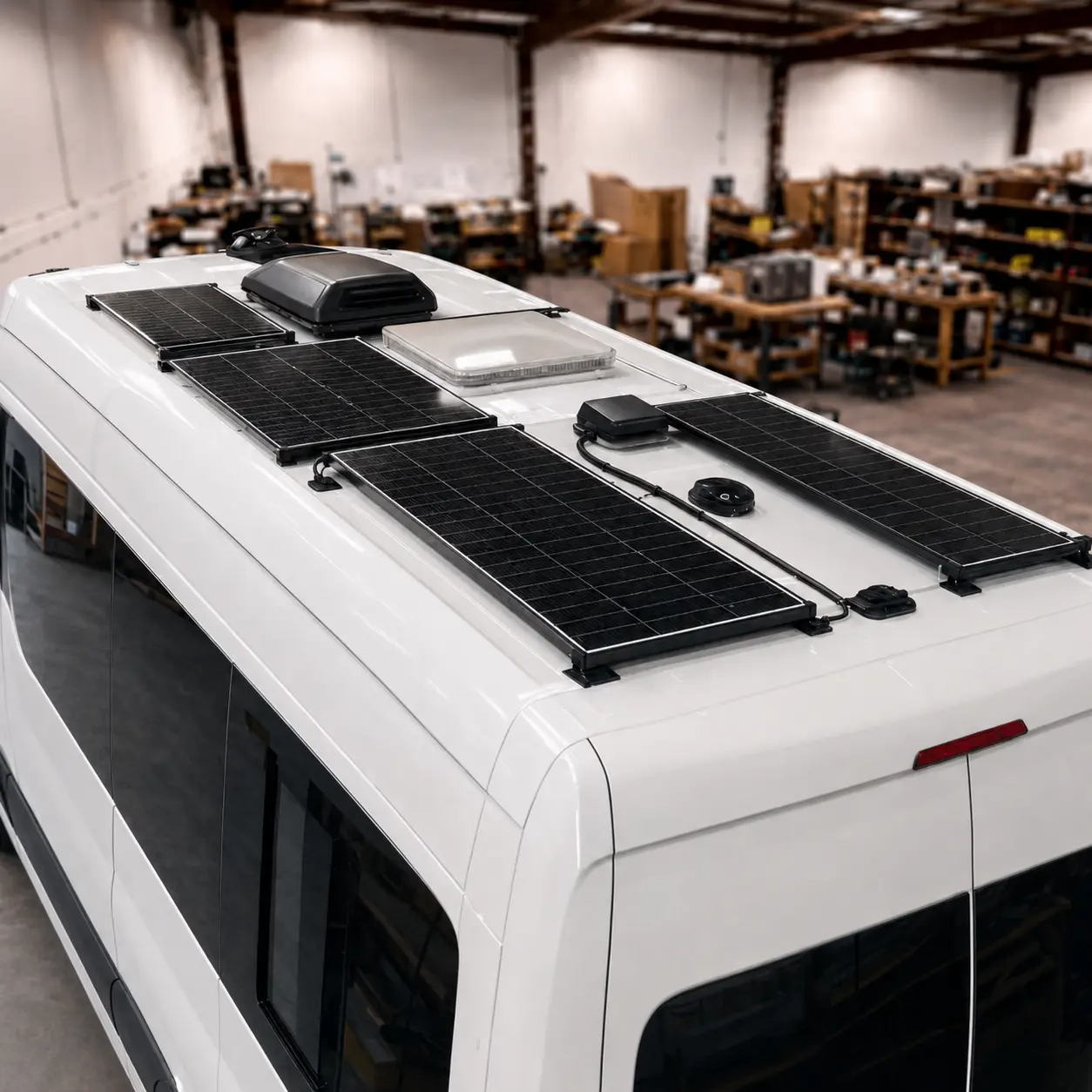
Roof-space planning, panel installation, MPPT control and tidy cable routing integrated with the wider battery system.
Panels · MPPT · Roof integrationPOWER · CHARGE · EXPLORE
Solar, lithium batteries, alternator and mains charging, inverters and monitoring—planned around your vehicle, appliances and the way you travel.
START WITH THE RIGHT QUESTIONS
A reliable off-grid system is only as strong as its weakest component. Increasing panel or battery capacity in isolation can leave the real limitation unresolved.
We assess the complete charging and power chain—including the appliances you want to run, typical stay length, available roof space, existing equipment and every way the batteries can recharge.
Discuss Your Current System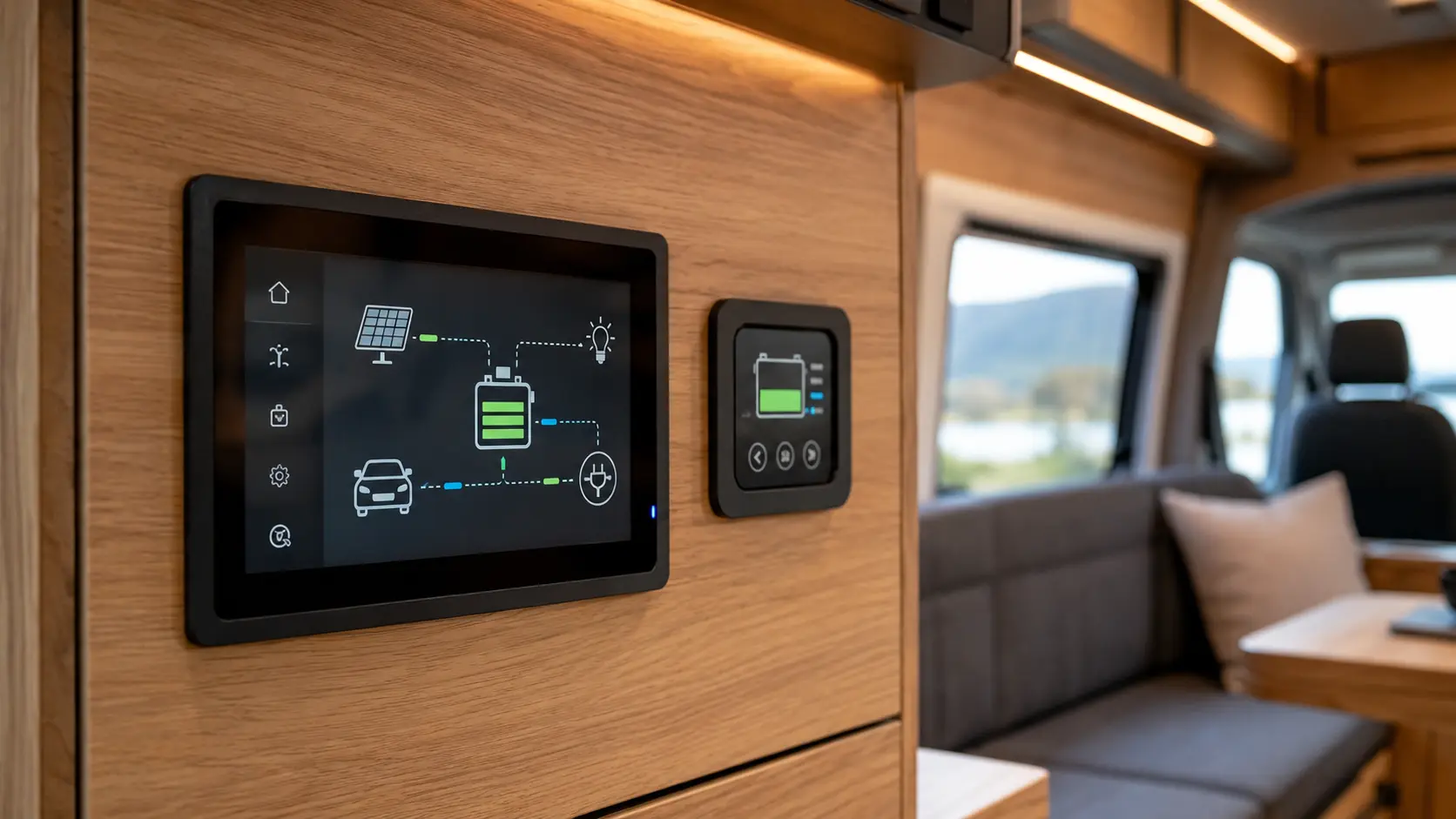
COMPLETE ELECTRICAL SOLUTIONS
We begin with the outcome you need, then design the battery, charging, power delivery, protection and monitoring around it.
Roof-space planning, panel installation, MPPT control and tidy cable routing integrated with the wider battery system.
Panels · MPPT · Roof integrationLiFePO₄ capacity, compatible charging, protection, monitoring and secure installation planned as one system.
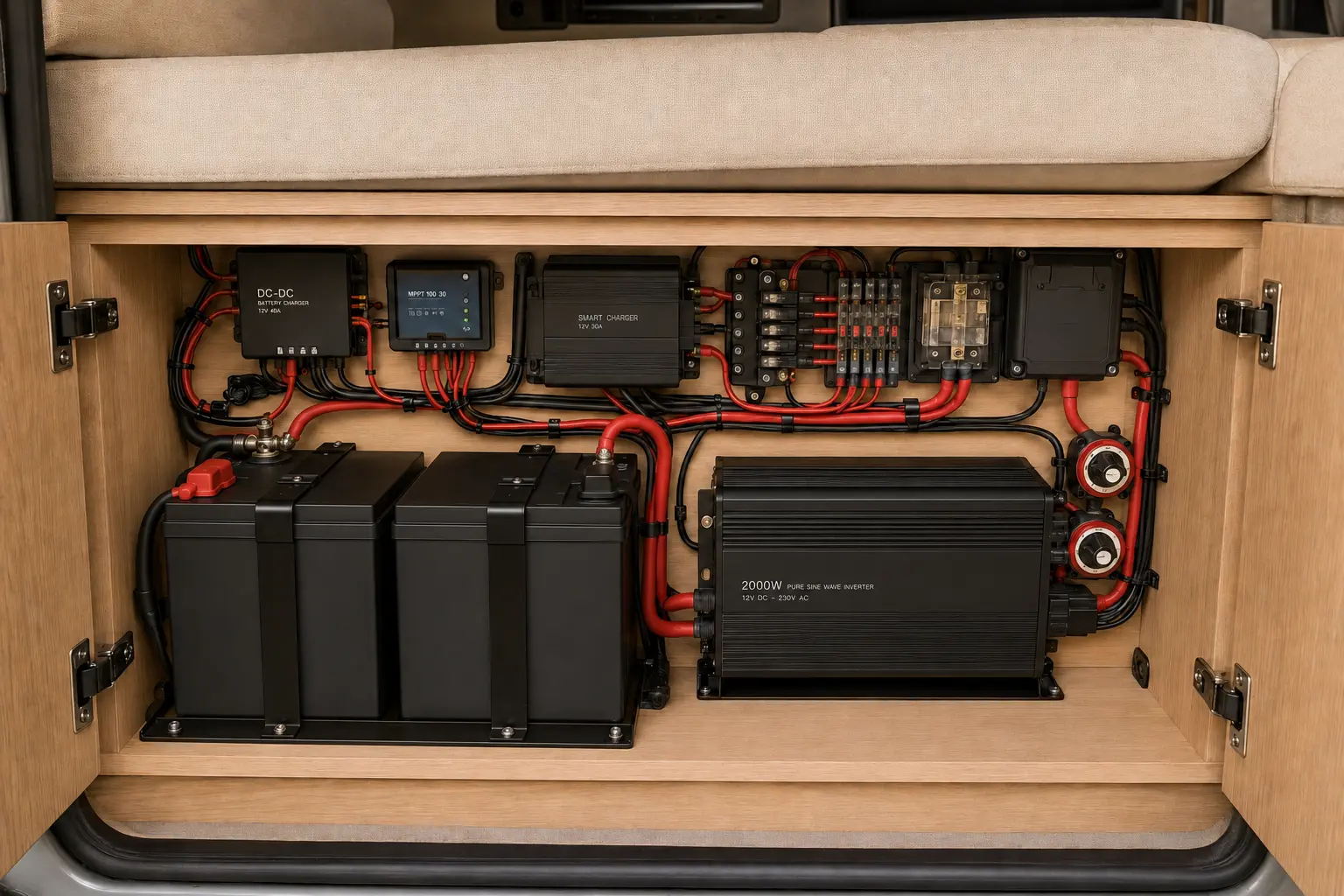
Battery · BMS · ProtectionDC–DC alternator charging, mains chargers and campground connection systems matched to the battery bank.
DC–DC · 230 V · ChargingPure sine-wave inverters, control displays, smart shunts, isolation and monitoring for clear day-to-day operation.
Inverters · Displays · ControlsONE CONNECTED SYSTEM
Charging sources, storage, protection and appliances need to be balanced. This is why we design the whole system before choosing individual components.
DESIGNED AROUND HOW YOU TOUR
These are planning directions rather than fixed packages. Every recommendation still begins with your real energy use and vehicle.
A balanced system for refrigeration, lighting, water pumps, device charging and normal touring use.
Greater battery and charging capacity for travellers who regularly spend longer periods away from mains power.
Carefully designed battery, inverter and charging systems for selected higher-demand appliances and electric living.
A CLEAR, GUIDED APPROACH
We discuss the appliances you use, how you travel and how long you want to stay off-grid.
Available roof space, existing components, charging sources and installation locations are reviewed.
Battery, solar, charging, inverter, protection and monitoring are specified to work together.
The agreed system is installed cleanly, checked carefully and prepared for handover.
You receive a practical walkthrough so you understand normal operation and monitoring.
CLEAN INSTALLATION MATTERS
Good electrical work is not only about component capacity. Secure mounting, appropriate protection, cable routing, access and a clear handover all matter to long-term usability.
ELECTRICAL SAFETY & DOCUMENTATION
Mains-voltage work is completed and certified through appropriately licensed electrical professionals. The documentation supplied depends on the work completed and the requirements that apply to your vehicle.
At handover, we explain normal system operation, isolation and monitoring, along with any ongoing electrical inspection requirements relevant to the installation.
ESTABLISHED RV POWER BRANDS
PRACTICAL ANSWERS
Every vehicle and travel style is different, but these are the questions that usually shape the right starting point.
It depends on your daily energy use, battery capacity, available roof space, season, shading and other charging sources. We assess the full system before recommending panel capacity.
Often, but lithium is not always a direct swap. Existing solar and mains chargers, alternator charging, fusing, cable capacity, battery restraint and monitoring all need to be checked.
The inverter should be sized around the appliances you genuinely intend to run, their starting loads and the capacity of the battery and cabling—not simply the largest unit available.
Solar output varies with weather, season, shade and panel angle. A reliable system considers solar alongside alternator charging, mains charging, battery capacity and realistic energy use.
Yes, subject to an initial review of the vehicle, existing installation and proposed scope. Photos are useful for the first discussion, followed by a workshop assessment where required.
The documents depend on the work completed. Where prescribed mains-voltage work is required, it is completed and certified through appropriately licensed electrical professionals.
POWER YOUR NEXT JOURNEY
Tell us about your vehicle, current setup and the appliances you want to run. We’ll help you identify the most practical next step.

Campervans, custom conversions and carefully engineered RV upgrades from our Christchurch workshop.
New Zealand designed · made · owned